
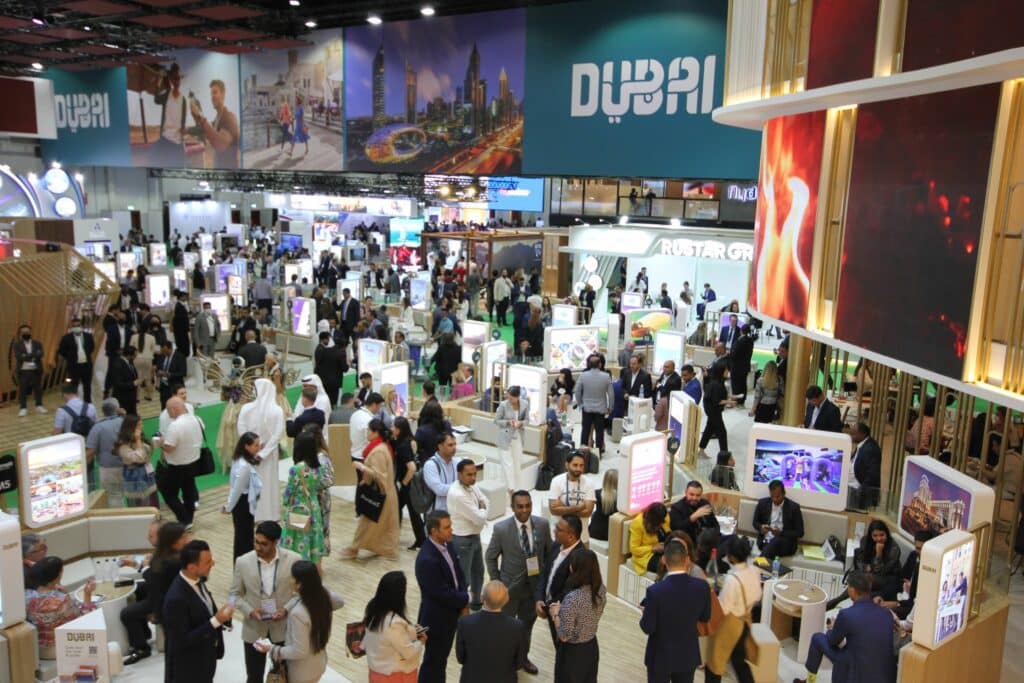
As the Arabian Travel Market (ATM) 2026 approaches (scheduled for May 4–7 at the Dubai World Trade Centre), the hospitality industry is shifting its crosshairs. A groundbreaking white paper by GSIQ, ATM’s official research partner, reveals that the “Sports Tourist” has officially become the most valuable demographic in the global travel ecosystem. In the Middle East alone, this sector is now valued at a staggering $600 billion, with frequent sports travelers spending double that of the average leisure tourist.
1. The “Double-Spend” Phenomenon
The 2026 data confirms that sports fans are no longer just “stadium-goers”; they are high-yield “Experience Seekers.”
- Higher Yield: Frequent sports travelers (those attending live events overnight) outspend traditional leisure tourists by 2:1.
- Premium Demands: These travelers are increasingly prioritizing ultra-luxury accommodation, private transport, and curated VIP hospitality packages.
- Extended Stays: Contrary to the “day-trip” myth, 41% of sports tourists are now likely to extend their event-based trip into a longer leisure holiday, boosting the regional “Length of Stay” (LOS) metric.
2. The $600 Billion Middle East Power Play
While the global sports tourism market is on track to hit $2 trillion by 2030, the GCC is capturing a disproportionate share of this growth.
- Infrastructure ROI: Massive investments in venues like the Jeddah Tower-adjacent stadiums and Qiddiya City are paying off. PwC estimates the Middle East sports sector is growing at 8.7% annually, nearly double the global average.
- The “Schengen” Effect: The rollout of the Unified GCC Tourist Visa in 2026 is acting as a force multiplier, allowing fans to follow tours (such as Formula 1 or regional football cups) across Dubai, Doha, and Riyadh seamlessly.
- Destination Loyalty: Nearly 80% of sports travelers return to the host destination as regular leisure tourists within 24 months, making sport the ultimate “top-of-funnel” marketing tool for the region.
3. ATM 2026: From “Beds” to “Experiences”
ATM 2026 is officially refocusing its entire “Global Stage” to address this shift.
- “The New Experience Economy”: A headline session at ATM will explore how to make sporting events “irresistible” by 2030, focusing on immersive technology and fan-centric design.
- Sports-Wellness Synergy: Research from Priority Pass (2026) shows that 33% of travelers now combine sports trips with wellness retreats, leading hotels to integrate “recovery suites” and “athlete-grade” nutrition into their standard luxury offerings.
- Digital Integration: ATM will showcase how Agentic AI is being used to manage the logistical friction of mass fan movements—from biometric stadium entry to personalized “fan-flight-hotel” bundles.
4. Generational Shift: Gen Z & Esports
The “High-Spending” label isn’t just for F1 fans anymore.
- The Esports Impact: With the Esports World Cup becoming a permanent fixture in Riyadh, a younger, digitally-native demographic is spending heavily on “Tech-First” hospitality.
- Life Goals: 46% of younger travelers now view attending a major global sporting event as a “Life Goal” milestone, ensuring that the sports tourism wave has a long-term, sustainable runway.
Comparative Spending: Sports vs. Leisure (2026)
| Metric | Average Leisure Tourist | High-Freq Sports Tourist |
| Spend Per Trip | $750 – $1,000 | $1,500 – $2,100 |
| Accommodation Tier | 4-Star / Mid-scale | 5-Star / Ultra-Luxury |
| Length of Stay | 3.5 Nights | 5.2 Nights (with extension) |
| Return Intent | 45% | 80% |